
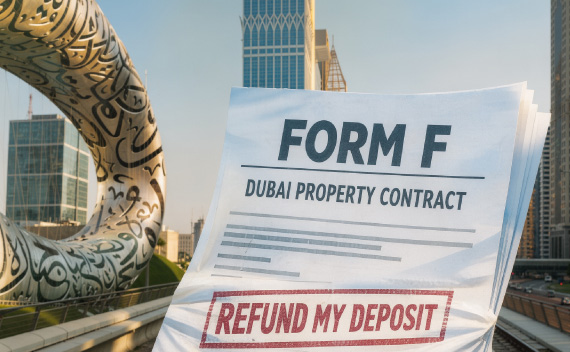
Over the past three months, regional developments have created a sense of unease. Almost daily, the same questions arise:
Can I cancel my property purchase?
Can I recover my deposit?
If the price has dropped, can I walk away?
The short answer, in most cases, is no. The legal position is more rigid than many expect.
What the UAE Civil Code Provides
The starting point is Article 273, which governs force majeure:
If a force majeure event occurs which renders performance of the obligation impossible, the corresponding obligation ceases and the contract is automatically cancelled.
The critical word is impossible. Not difficult. Not more expensive. Not commercially unfavourable.
If only part of the contract becomes impossible, that part alone is extinguished. If the impossibility is temporary, the contract is suspended rather than cancelled.
Force Majeure and Hardship Are Not the Same
Article 249 addresses hardship:
If exceptional circumstances of a public nature arise, making performance oppressive for the obligor and threatening grave loss, a judge may reduce the obligation to a reasonable level.
This provision does not cancel contracts. It does not entitle a party to a refund of a deposit. It allows judicial intervention in limited circumstances, and only through the courts.
What If Property Prices Fall
This is often the real concern.
A decline in market value, even a significant one, does not entitle a buyer to terminate the contract or recover the deposit under UAE law. Whether under a standard Form F or another sale agreement, the principle remains consistent.
Price movements are regarded as normal market risk. Both parties agreed to a fixed price. A subsequent change in value, however unfortunate, does not alter that agreement.
It is neither force majeure nor hardship. It does not provide a legal basis to withdraw.
The contract remains binding, and the deposit remains exposed if the buyer defaults.
Why Current Conditions Do Not Meet the Threshold
Despite regional tensions, there has been no declaration by the UAE authorities recognising force majeure in the real estate sector.
Force majeure is not triggered by uncertainty or market sentiment. It requires strict legal criteria:
It must be unforeseeable at the time of contracting
It must be unavoidable despite reasonable efforts
It must render performance objectively impossible
Current conditions may create hesitation, but they do not prevent completion. Transactions continue, developments progress, and contractual obligations can still be performed.
Practical Implications
For buyers, unless the contract expressly permits termination in the present circumstances, withdrawal without legal justification is likely to constitute breach. The deposit may be forfeited.
For sellers, general regional developments do not provide buyers with a lawful basis to terminate or reclaim deposits. The obligation to perform remains intact.
When Force Majeure Might Apply
Force majeure will only arise in limited scenarios, such as a direct and binding government restriction that makes completion legally impossible.
That threshold has not been met.
The Position in Summary
There has been no government declaration
There is no recognised force majeure
There is no automatic cancellation
There is no entitlement to a refund based on market movement or uncertainty
The legal framework remains stable, and the market continues to operate.
A Final Note
There are circumstances in which a contract may be terminated and a deposit recovered. These situations are fact specific and depend on the terms of the agreement and the surrounding facts.
If there is any uncertainty, it is prudent to obtain legal advice before taking action.
For further information or to discuss how this may apply to your situation, please contact Wael Deyab at w.deyab@alsuwiaid.ae