
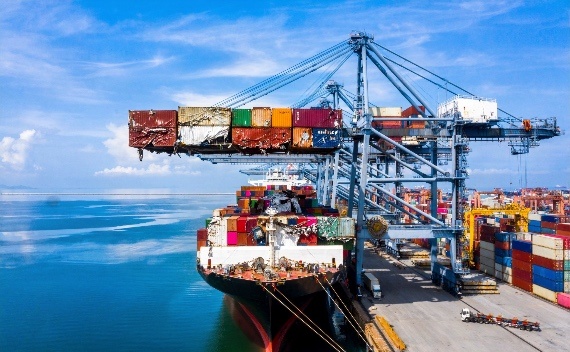
A vessel is diverted. The voyage becomes longer and more expensive. The carrier announces an emergency surcharge on cargo already in transit, while some goods arrive damaged and others are lost altogether. In response, the captain cites safety considerations as the basis for the decisions taken during the voyage.
The UAE Maritime Commercial Law, issued under Federal Decree Law No. (43) of 2023, addresses these situations directly and provides important guidance on the allocation of risk and responsibility between carriers and cargo interests.
Freight Increases During the Voyage
Can a carrier impose additional freight charges mid-voyage on cargo already at sea? Under the UAE Maritime Commercial Law, cargo interests benefit from significant legal protection in this regard.
The law provides that no agreement may entitle a shipowner to freight in all circumstances, and any provision attempting to do so may be deemed invalid. In addition, where the vessel becomes idle as a result of a force majeure event, freight may no longer remain payable under certain circumstances.
This creates a substantial legal hurdle for carriers seeking to impose emergency surcharges during transit. Broad clauses in Bills of Lading permitting freight adjustments under exceptional conditions may therefore be subject to challenge in light of the protective nature of the law. The legislation seeks to preserve a fair allocation of risk between the parties rather than allowing one party to transfer the entirety of the commercial burden to the other.
Damaged Cargo and Total Loss
The obligation to pay freight generally survives instances of cargo damage. The law makes clear that freight may still be payable even where the goods arrive damaged or have diminished in value during the voyage. Damage alone does not automatically extinguish the consignee’s payment obligation.
The position differs, however, in cases involving the total destruction of the cargo. Where goods are completely destroyed as a result of force majeure or the carrier’s negligence, freight may cease to be payable. In practice, the distinction between partial damage and total loss remains significant, as the legal consequences differ considerably.
The law also addresses circumstances in which cargo is sacrificed for the preservation of the vessel or other goods onboard. Where the captain removes cargo to protect the ship and remaining cargo interests, freight may still remain payable in relation to those goods, subject to the applicable General Average principles.
Carrier Protection in Safety-Driven Decisions
Diversions are often driven by safety concerns. In this context, the UAE Maritime Commercial Law provides important protection for carriers acting reasonably and in good faith.
The carrier may not be held liable for loss, damage, or delay resulting from efforts to save lives at sea or from reasonable measures taken to preserve property or ensure maritime safety.
Accordingly, decisions such as rerouting a vessel away from hazardous areas or offloading cargo to protect the crew and vessel may not necessarily amount to a breach of contractual obligations. While the financial consequences of the diversion may be addressed separately under applicable contractual or legal provisions, safety-driven decisions themselves are afforded a degree of legal protection under the law.
Key Takeaways
For cargo interests facing these situations, several principles remain particularly important. First, attempts to impose additional freight charges during transit may face legal scrutiny under UAE law. Second, freight obligations may continue despite cargo damage, whereas total destruction of the goods may alter the legal position entirely. Third, carriers acting reasonably for safety purposes benefit from important statutory protections against certain claims arising from delay or loss.
Understanding these principles before disputes arise can place cargo interests, charterers, and carriers in a stronger position when navigating force majeure events and the commercial challenges that follow.
Should you require further advice regarding force majeure events and their implications for shipping arrangements, cargo claims, or freight disputes, please feel free to contact Wael Deyab at wael.deyab@alsuwaidi.ae or Zeyad Elmorsi at z.elmorsi@alsuwaidi.ae